
Does an EV Charger Add Value to Your Home in Aliso Viejo?
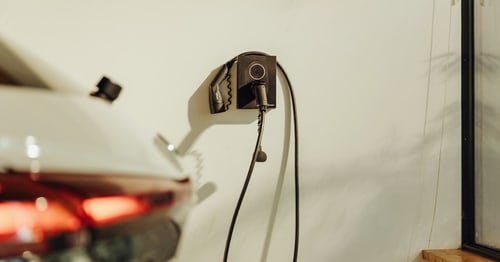
If you are weighing a home charger in Aliso Viejo, the question underneath the decision is usually about resale: will a 240-volt circuit in the garage pay you back when you sell, or is it money spent purely on your own convenience? It is a fair thing to ask in a city where nearly every home was built to a master plan and buyers compare floor plans street by street. The honest answer is that an EV charger rarely shows up as a tidy line item on an appraisal, but it does make a home easier to sell to a fast-growing pool of buyers, and in South Orange County that pool is larger than almost anywhere in the country. Here is how to think about the value, which setup earns it, and what it costs to get there.
The Short Answer on Resale Value
- An EV charger is a marketability feature more than a fixed dollar add: it widens your buyer pool rather than guaranteeing a set return.
- Home charging is how most EV owners refuel, so a charge-ready house removes a real objection for electric-vehicle shoppers.
- A permanent, professionally installed Level 2 circuit adds more perceived value than a portable cord you take with you.
- In Aliso Viejo's many HOA and attached-home communities, a home that already has charging stands out because retrofitting one there is harder.
- Southern California Edison rebates can cover much of the wiring cost, which improves the math whether you stay or sell.
Does an EV Charger Actually Add Value to Your Home?
An EV charger adds value mainly by making a home more marketable, not by adding a guaranteed, appraiser-certified dollar amount. Appraisals lean on comparable sales, and in most neighborhoods there are not yet enough sold homes with chargers to establish a formal premium. What a charger does is remove friction: an electric-vehicle buyer touring your home sees one less project to tackle after closing. Because the U.S. Department of Energy's Alternative Fuels Data Center notes that most EV drivers charge overnight at home rather than at public stations, a ready-to-use home circuit is close to essential equipment for that buyer, not a luxury. For a seller, that translates into a shorter list of objections and, often, a faster sale. The feature works the way a finished garage or owned solar does: it rarely returns dollar-for-dollar on paper, but it helps the right buyer choose your home over a comparable one down the street that would need an electrician before move-in.
Why Home Charging Appeals to Aliso Viejo Buyers
Home charging appeals here because South Orange County has one of the densest concentrations of EV owners in the state. California surpassed 2.5 million cumulative zero-emission vehicle sales in 2025, and the California Energy Commission reports that ZEVs made up 18.9% of new car sales in the fourth quarter of that year, more than triple the national rate. Aliso Viejo fits the profile behind those numbers: a commuter city of roughly 52,000 whose residents drive to Irvine, Laguna Hills, and farther along the SR-73, exactly the daily mileage that makes an electric car worth owning. When nearly one in five new cars sold in the state plugs in, the share of buyers touring your home who already own or plan to own an EV only climbs. A charge-ready house speaks directly to them, and it signals to everyone else that the home has been kept current. That is the quiet part of resale value: not a number, but a wider and more motivated audience.
What Kind of EV Charging Setup Adds the Most Value?
The setup that adds the most value is a permanent, professionally installed 240-volt circuit, not a plug-in cord the next owner cannot count on. A Level 2 charger installation wired into a dedicated circuit stays with the home, passes inspection, and reads as a real improvement. Buyers draw a clear line between a hardwired station or a dedicated NEMA 14-50 outlet and a portable unit a seller might take along. Equipment quality matters too: an ENERGY STAR certified charger is tested for safety by a nationally recognized laboratory and uses about 40% less energy in standby, a detail a sharp buyer or inspector will notice. If you plan to take your charger when you move, leaving the dedicated circuit, outlet, and any panel work behind still delivers most of the value, because the expensive, hard-to-add part is the wiring, not the plug-in box. The goal is to hand the next owner a driveway that is ready to charge on day one.
How Aliso Viejo's Housing Stock Changes the Equation
Aliso Viejo's housing stock makes a ready charger stand out more than it would in an older, single-family suburb. Incorporated in 2001 as Orange County's newest city, it was built out from a 1980s master plan, so a large share of its roughly 20,000 homes are townhomes, condos, and attached residences inside HOA communities. Those are precisely the homes where adding a charger later is hardest: shared walls, assigned parking, and HOA approval can turn a simple install into a months-long project. A detached home or an end unit that already has a dedicated circuit therefore carries a scarcity advantage, offering something many comparable listings physically cannot. The flip side is capacity. Homes wired decades ago may run a 100- or 125-amp panel already loaded with air conditioning and an electric range, so checking your panel's capacity for EV charging matters before you assume a charger is easy to add. For owners in condo or HOA settings, multi-family and HOA charging solutions exist, but they take more planning than a single-family driveway.
What It Costs to Become Charge-Ready in Aliso Viejo
Becoming charge-ready usually costs less than owners expect, especially once local incentives are applied. Industry sources put a typical residential Level 2 installation in the range of roughly $800 to $2,500 when the panel has spare capacity, with the price rising when a new circuit must run a long distance or the panel itself needs work. The part that moves the number most is the electrical service: an older home that needs a panel upgrade to make room for the circuit sits at the higher end. Southern California Edison helps close that gap. Its Charge Ready Home program offers eligible households up to $4,200 toward a panel upgrade and EV outlet, or up to $1,000 for an outlet alone when the panel is already 200 amps or larger. Those rebates target income-qualified customers and residents of disadvantaged communities, so not every household qualifies, but for those who do the out-of-pocket cost of becoming charge-ready drops sharply, which only improves the return whether you keep the home or list it.
Protect the Value: Permit the Work and Keep the Paperwork
The value of a charger holds up only when the work is done to code and documented. An unpermitted circuit added by a handyman can become a negotiating point during a home inspection rather than a selling feature, and it can force a correction before escrow closes. Pulling a permit through the city, using a licensed electrician, and keeping the final inspection record turns the installation into something a buyer, appraiser, and inspector can all trust. Save the receipts, the permit, and the equipment manual with your other home records. When it comes time to sell, a charger you can prove was installed correctly is an asset; one nobody can vouch for is a question mark.
Planning a charger as part of a remodel or a pre-sale upgrade in Aliso Viejo? A licensed C-10 electrician can tell you in one visit what your panel supports and what the install will cost.
Get a Free QuoteFrequently Asked Questions
Will an EV charger increase my home's appraised value?
Usually not as a fixed, separate line item, because appraisers rely on comparable sales and few sold homes yet carry chargers. Its value shows up instead in marketability, a faster sale and a wider buyer pool, much like owned solar or a finished garage.
Should I leave my charger when I sell, or take it?
You can take a plug-in unit, but leave the dedicated 240-volt circuit, outlet, and any panel work in place. That wiring is the expensive, hard-to-add part, so the home stays charge-ready for the next owner even if the box leaves with you.
Does a home charger help even if the buyer does not own an EV yet?
Yes. With zero-emission vehicles now near one in five new cars sold in California, many buyers expect to go electric within a few years and value a home that is already prepared. A charge-ready garage reads as future-proofing to them.
Is it worth installing a charger shortly before selling?
It can be, especially if your home competes with attached or HOA properties where charging is hard to add. A professionally installed, permitted circuit differentiates your listing; just confirm your panel has capacity first so the project stays on budget.
Make Your Aliso Viejo Home Charge-Ready
Whether you are future-proofing for your own EV or getting a home ready to list, our licensed, EVITP-certified team installs Level 2 charging and handles the panel work some Aliso Viejo homes need. Tell us about your garage and we will map out the right setup.