
How Long Does It Take to Charge an EV at Home in Aliso Viejo?
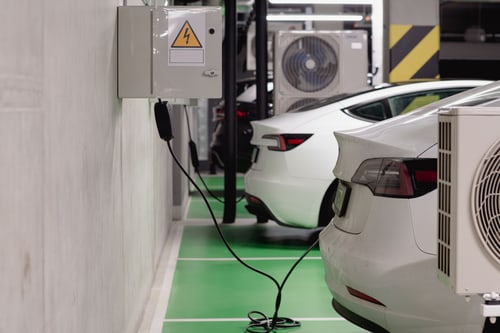
Pull into a garage in Glenwood or Vantis after the evening commute down the SR-73, plug in, and the question is always the same: will the car be ready by morning? For nearly every EV driver in Aliso Viejo the answer is yes, but how long it takes to charge an EV at home swings from under an hour to more than a full day, depending on the equipment you plug into and the car you drive. This guide breaks down the charging levels, the simple math behind charging speed, and the real overnight numbers for a typical South Orange County household.
The Short Version
- A standard 120-volt outlet (Level 1) adds roughly 5 miles of range per hour: fine for daily driving, slow for a full refill.
- A 240-volt Level 2 charger adds about 25 miles of range per hour, five times faster, and refills most EVs overnight.
- A full home charge typically takes 3 to 12 hours, depending on battery size and charger power.
- Your charging speed is capped by the lower of two numbers: the charger's kW and your car's onboard charger limit.
- In Aliso Viejo, starting the charge after 9 p.m. lines up with Southern California Edison's lower overnight rates.
What Decides How Long a Home Charge Takes?
Home charging speed comes down to three variables: the power your charger can deliver, the maximum your car can accept, and how depleted the battery is when you plug in. Power is measured in kilowatts, and the lower of your charger's output and your vehicle's onboard charger sets the real rate. A 48-amp Level 2 unit can push about 11 kW, but if your car accepts only 7.2 kW, then 7.2 kW is what you get. Battery size matters too: a 40 kWh commuter hatchback and a 100 kWh SUV plugged into the same charger will finish hours apart.
The useful way to think about it is miles of range per hour, not a single full-charge number, because almost nobody arrives home empty. Most drivers top up the 30 to 50 miles they used that day, so the practical question is whether your setup replaces a day of driving overnight. For home charging in Aliso Viejo, it almost always does.
How Fast Is Level 1 Charging on a Standard Outlet?
Level 1 charging uses an ordinary 120-volt household outlet and adds about 5 miles of range per hour, according to the U.S. Department of Energy's Alternative Fuels Data Center. That works out to roughly 40 miles over an eight-hour overnight stretch at 1.9 kW, with no equipment to install beyond the cord that came with the car. For a plug-in hybrid or a short local commute, Level 1 is genuinely enough.
The limit shows up when the battery is large and low. A full battery-electric SUV run down to 20 percent can take well over a day to fill on Level 1, which is why most households that drive more than a few miles a day outgrow the trickle charger quickly. It is a fine backup and a poor primary once your mileage climbs.
How Fast Is Level 2 Charging in a Home Garage?
Level 2 charging runs on a 240-volt circuit, the same voltage as an electric dryer, and adds about 25 miles of range per hour, roughly five times the speed of Level 1. A typical residential Level 2 unit draws 30 amps and delivers 7.2 kW, though home equipment ranges from 2.9 kW up to 19.2 kW depending on the charger and your panel.
At that rate most EVs go from nearly empty to full in a single overnight window, and a normal daily top-up finishes in an hour or two. That is the sweet spot for home charging, and it is why a Level 2 charger installation is the upgrade most Aliso Viejo drivers make once the slow pace of the included cord wears thin.
How Do You Calculate Your Own Charging Time?
To estimate your own charging time, divide the energy you need by your charging power: hours equal kilowatt-hours needed divided by charger kW. If you need to add 40 kWh and your Level 2 charger delivers 7.2 kW, that is about five and a half hours; the same 40 kWh on a 1.9 kW Level 1 cord is over 20 hours. The gap between the two is the whole case for Level 2.
Quick version: miles needed divided by the miles-per-hour of charging equals hours to charge. Replacing a 50-mile day on Level 2 at 25 miles per hour takes about two hours; the same day on Level 1 at 5 miles per hour takes ten.
Two caveats keep the math honest. Charging slows as the battery nears full, so the last ten percent always takes longer than the first, and your car's onboard charger caps the speed no matter how powerful the wall unit is. Even with those, this back-of-the-envelope method is close enough to plan your week around.
What Do Real Overnight Charging Times Look Like in Aliso Viejo?
For a typical Aliso Viejo household, a full home charge takes 3 to 12 hours, the range the U.S. Department of Energy's FuelEconomy.gov gives for battery EVs, and on Level 2 even the long end fits inside a night. A driver commuting to Irvine or Laguna Hills and back rarely needs a full charge anyway; they are replacing a day of miles, which Level 2 handles in an hour or two.
Timing matters as much as speed here. Southern California Edison charges the most between 4 and 9 p.m. on its EV rate plan and far less overnight, so setting your charger or car to start after 9 p.m. means the battery fills while rates are low and you are asleep. You get the speed of Level 2 and the cheapest power of the day at once. A garage near Aliso Creek or in the newer Glenwood tracts almost always has room on the panel for the 240-volt circuit this needs.
Will Your Electrical Panel Keep Up with Faster Charging?
Faster home charging depends on your electrical panel having spare capacity, not just on buying a bigger charger. A 240-volt Level 2 circuit typically needs a 40- or 50-amp breaker, and many Aliso Viejo homes built in the 1980s and 1990s run a 100- or 125-amp main panel that is already carrying an air conditioner, an electric range, and more. When there is headroom, an electrician simply adds a dedicated circuit; when there is not, a panel upgrade or a smart load-management device makes room without overloading the service.
There are two common ways to wire the circuit. A hardwired charger connects directly and supports the highest amperages and the fastest home speeds, while a NEMA 14-50 outlet lets you plug in a portable Level 2 unit and take it with you if you move. Both deliver true Level 2 range-per-hour; the choice is about how much amperage your panel can spare and whether you want the charger fixed or removable. A short load calculation answers that before you buy any hardware, so the charging speed you plan for is the speed you actually get.
Which Charging Setup Fits Your Driveway?
The right setup depends on how far you actually drive. If your days are short and predictable, the Level 1 cord in the trunk may cover you indefinitely with zero installation. If you drive like most South Orange County commuters, with freeway miles on the I-5 and SR-73 and errands across the county, Level 2 turns charging into something you stop thinking about: plug in at night, leave full every morning. The deciding factor is rarely the car and almost always your daily mileage set against the hours the car sits at home.
If a trickle charge no longer keeps up with your week, a licensed electrician can tell you quickly whether your panel is ready for a 240-volt circuit. Aliso Viejo EV Charger handles Level 2 charger installation and the panel upgrades some older homes need, a sensible first call when you want home charging to keep pace with how you drive.
Not sure whether your home can hit Level 2 speeds? A licensed Aliso Viejo electrician can size the circuit and give you a straight answer in one visit.
Get a Free QuoteGet Home Charging That Keeps Up With Your Miles
From a quick Level 2 circuit to a full panel upgrade, our licensed, EVITP-certified team sets up Aliso Viejo homes to charge overnight and be ready every morning. Tell us what you drive and we will point you to the right setup.